
How to Protect Your Lawn from Fall Armyworm Damage in North Carolina
As fall approaches in North Carolina, lawns face a common threat: fall armyworms. These pests can quickly turn your beautiful green lawn into a brown, patchy mess. But don’t worry—with the right steps, you can protect your lawn from pest damage. Here’s everything Charlotte homeowners need to know to be prepared for an armyworm infestation.
What is an Armyworm?
Commonly referred to as fall armyworms due to their seasonality, they are the caterpillars of a moth that can do heavy damage to lawn grasses. They are most active in late summer and early fall. These caterpillars move in large groups, eating grass quickly and leaving behind bare patches in your lawn. Armyworms have green or brown-colored bodies and are normally around ½ an inch long. Because they travel in an “army”, if you see one, it’s safe to assume there are others nearby.
Signs of Fall Armyworm Damage
Knowing what to look for can help you catch an infestation early. Here are some signs that armyworms might be in your lawn:
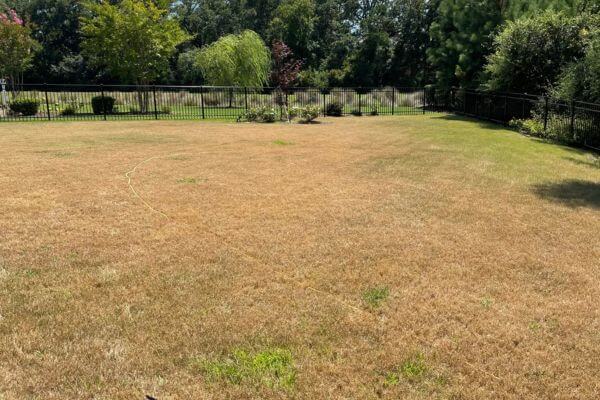
- Brown Patches: Armyworms eat grass blades, which can make your lawn look brown or dead in some spots, commonly mistaken as drought stress.
- Chewed Grass Blades: If you look closely, you might see that the edges of the grass blades are chewed up.
- More Birds in Your Yard: Birds love to eat armyworms, so if you notice more birds than usual pecking at your lawn, it could mean you have a problem.
- Seeing the Caterpillars: You might actually see the armyworms on your grass. They’re usually green, brown, or black with stripes and an inverted Y-shape on their head. They also move in groups, and it may look like the grass blades are swaying in waves.
Preventing Fall Armyworms
It’s easier to prevent armyworms than to get rid of them once they’ve arrived. Here’s how you can stop them before they start:
- Keep Your Lawn Healthy: Mow your lawn regularly, water it, and fertilize it. A healthy lawn is less likely to get infested. Healthy watering will also rule out drought stress if you see discoloration appear.
- Check Your Lawn Often: Keep an eye on your lawn, especially during late summer and early fall. Catching armyworms early can save your lawn from a lot of damage.
- Encourage Natural Predators: Birds and certain insects eat armyworms. Having these natural predators around can help keep the armyworm population down.
- Preventative Insecticides: There are some insecticides available that can be effective in preventing armyworms and other common lawn pests. Fairway Green offers armyworm control for homeowners that want to protect their lawns.
Getting Rid of Fall Armyworms
If you notice fall armyworms in your lawn, you must act fast. The best way to get rid of an armyworm infestation is to call in a lawn care professional like Fairway Green. Armyworms cause damage to a lawn sooner than you may even notice their presence. If you’re not sure what to do or if the infestation is really bad, a lawn care professional can help you get rid of the armyworms. Contact Fairway Green today if you are dealing with active armyworms. While there are some storebought insecticides available, you want to be sure you are tackling them with the best quality treatment to save your lawn from extensive damage. If the infestation is small, you can treat just the affected areas instead of spraying your whole lawn. For peace of mind, we recommend armyworm prevention early in the season, with Fairway Green on speed dial if an issue arises!
Helping Your Lawn Recover
After dealing with armyworms, your lawn might need some extra care to bounce back:
- Aeration: While we recommend it every year, aeration is even more important following pest damage. Aeration helps strengthen root systems and improve lawn health and appearance. Fairway offers core and liquid aeration in the spring, as well as liquid aeration during the fall. If you dealt with armyworms this season, liquid aeration would be helpful to repair the root systems before harsh winter weather. Contact us for a free quote.
- Overseeding: It’s uncommon but not impossible for armyworms to target a fescue lawn. If there are bare spots in your lawn, planting new fescue seed during fall can help fill them in. Fairway Green offers fall overseeding for fescue lawns in Charlotte through October.
- Fertilizing: A balanced fertilizer can help your lawn grow back stronger and healthier.
- Watering: Keep your lawn well-watered as it recovers. Healthy grass will grow back faster.
Professional Lawn Pest Control Near Charlotte and Raleigh
Fall armyworms can cause a lot of damage, but by taking the right steps, you can protect your lawn. Keep an eye out for signs of armyworms, take action quickly if you find them, and give your lawn the care it needs to recover. If you ever feel unsure, don’t hesitate to contact Fairway Green for help. We’re a local lawn care service in Charlotte and Raleigh. With years of experience, you can trust that your North Carolina lawn is in great hands with our team. In addition to armyworm control, we offer weed control and fertilization, aeration and seeding, tree and shrub care, plant growth regulators, and more. Contact us today for a free quote!
