

1. Reminder For Maintenance Program Customers
Fertilizer applications naturally lower pH levels in all soil types. While not drastic, this does move the level from ideal to too low for healthy grass development. This is why we apply limestone every year even if your current pH levels are in the proper range. Limestone is the workhorse for your soil and will adjust/maintain pH and micronutrient levels for a two-year period.
We will be in touch to schedule your limestone with micronutrients application if you’ve not already received one this year (even if it’s done close to next year’s application, both will still be fully effective).
2. Weed Woes:
Poa Annua (Annual Bluegrass) and Broadleaf Weeds
Controlling Poa Annua in Cool-Season Lawns

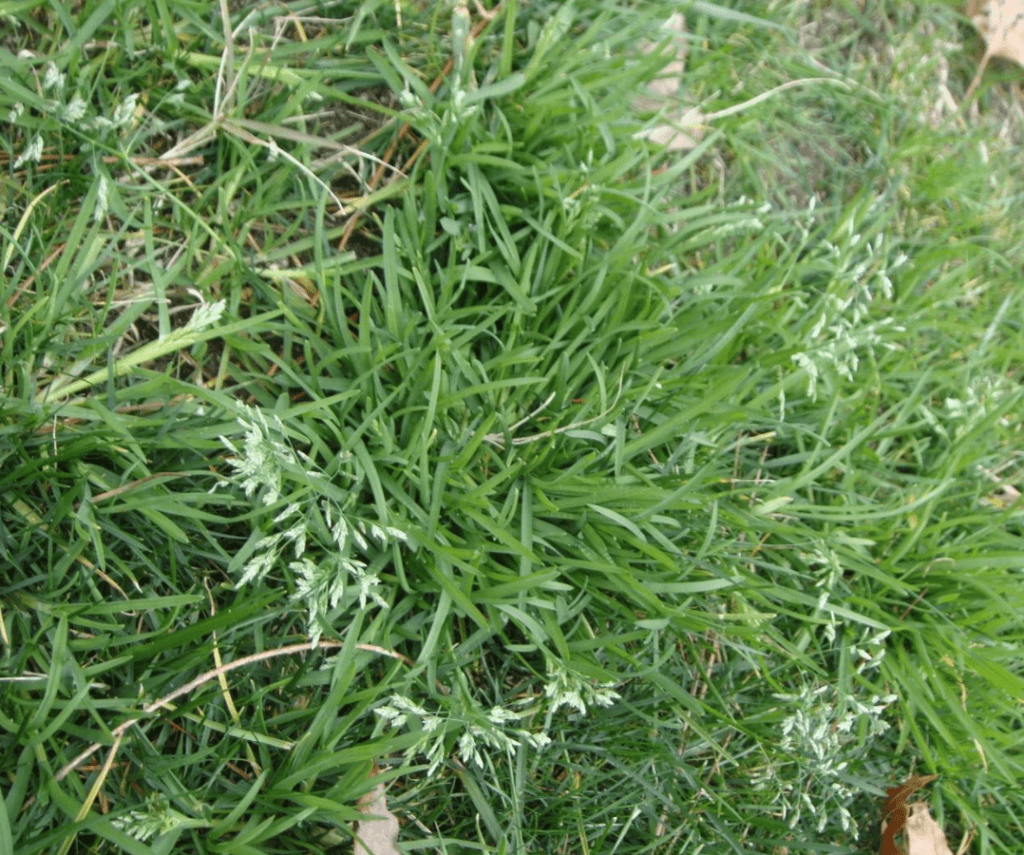
It’s hard to recognize Poa annua in cold-season turf like fescue until late spring, when it produces tan-colored seed heads and the leaf blades turn an off-green. Poa annua control is generally extremely difficult. It requires two applications of a special product in November, then again in December. Both must happen roughly 30 days apart, and this will only control 70% to 75% of potential germination.
Controlling Poa Annua in Warm-Season Lawns


Poa annua is easily seen in warm-season turf grasses like Bermuda and Zoysia during the winter because it will be green and actively growing (contrasting with dormant grass). Control must often happen from October to December, so if you’ve not yet started on treatments, it will be harder to deal with. As part of our weed control services, we use a special warm-season turf product—via 30-day application cycles—that provides 70% to 75% control.
Please note: Neither application process will eliminate or control 100% of Poa annua (it is simply not possible to do this). Due to excessive control product costs, applications are done at an additional cost outside of regular weed service (at the same price per application).
Controlling Broadleaf Weeds


Pre-emergent weed control applications from the past winter and spring have broken down by now, which allows broadleaf weeds to germinate and develop. While your first instinct may be to return to pre-emergent weed control applications, these will prevent seed germination and development in cool-season lawns. Warm-season lawns can definitely benefit from it.
Broadleaf weeds will never stop developing in a lawn, even after years of management. This is because most weed seeds stay viable in a soil’s profile for many years, which is why we try to do post-emergent broadleaf weed control yearly.
3. What Should I Do About Leaves & Other Natural Debris on My Turf?

Before you throw it all out, just know that your lawn can potentially benefit from it.
4. Using Dormant Oil To Protect Ornamental Trees & Shrubs From Insects
Applications of dormant oil, otherwise known as horticulture insecticide oil, can help control insects by suffocation and tissue absorption. It can be applied safely to ornamental trees and shrubs from now until around March, and it can work especially well for some difficult-to-control scale mites. However, it won’t help control all of them and can potentially cause plant injury if applied incorrectly. Be sure to follow labels carefully and try to know what insects you’re dealing with and what the best timings are for control.
For further help identifying and controlling insects on your ornamentals, just turn to Fairway Green.
5. Cool-Season Lawn Seeding Faced Another Challenging Year
For cool-season lawns like fescues, germination and development will be slow going until spring since shorter days (less photosynthesis) and cooler ground temperatures are less than ideal for it. As of this writing, nighttime air temperatures have been below normal, causing even cooler ground temperatures than average for this time of year.
If you still have thin areas and seeds on the ground, be patient. Seeds will continue to germinate through late fall, early winter and early spring, but it may be slow going. Applying more seed on top of seed that has not germinated yet will only waste it; you should only reseed in spots where it’s actually needed (e.g., if the weather has created bare spots in your yard).
Generally, we will receive enough rainfall to maintain good soil moisture this time of year for seed development. However, if we go through a warm dry period, light watering or irrigation cycles 3-4 times a day may help seed germination start sooner. This can be challenging if you have in-ground irrigation that has been/will be winterized.
Why Are Different Parts of My Lawn Maturing Faster Than Others?
It is not uncommon to see different parts of cool-season turf developing faster than others after seeding. This can be due to them having different:
- Levels of shade
- Soil hardness
- Amounts of nearby tree roots
- Levels of sunlight
Rarely does turf germinate, develop and mature at the same rate throughout a lawn, so rest assured that this is very normal.
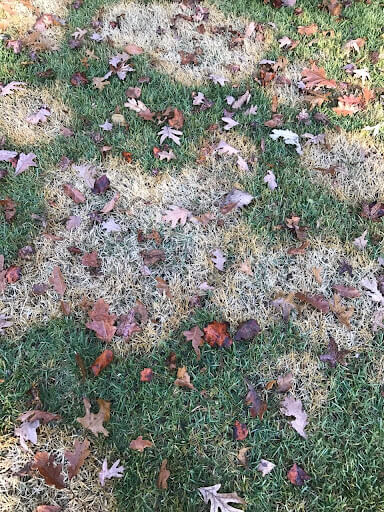
6. Large Patch Fungus Still a Concern on Warm Season Turf
Large patch fungus is a harmful disease for Zoysia, Bermuda, centipede and St. Augustine turfs in the fall, and Fairway Green is seeing more cases of it every year in our area. Damage occurs before you can even be aware of it and will not be visible until green-up in the spring. Controlling large patch fungus requires two applications of preventative fungicide in the spring and fall, or when ground temperatures are between 50 and 70 degrees.
